The French vehicle fleet is aging. The average age of vehicles on the road now exceeds a decade, and regulatory constraints are evolving rapidly: the disappearance of the green card, the opening of connected vehicle data to insurers, and stricter technical inspections. In this context, the choices made at the time of purchase, during routine maintenance, and when taking out insurance are more closely intertwined than before.
Connected vehicle data and auto insurance: what the Data Act changes
Since September 2025, the European Data Act gives the owner of a connected vehicle the right to access the data generated by their car. This information (actual mileage, driving style, technical alerts) can be transmitted to a third party, such as an insurer, in a usable format.
In practical terms, this paves the way for insurance contracts that are more based on the actual use of the vehicle. A driver who drives little, in a rural area, with a smooth driving style, could be offered a lower premium. On the other hand, profiles that are more exposed to risk have no reason to benefit from this.
Field reports vary on this point: not all insurers are yet exploiting this data, and effective portability remains uneven depending on the manufacturers. Resources like mon-guide-auto.fr allow tracking the evolution of these offers and comparing the available options in the market.

End of the green card: auto insurance verification by the FVA
Since April 1, 2024, the insurance sticker on the windshield is no longer mandatory for vehicles registered in France. The paper certificate no longer needs to be kept in the glove compartment either.
Verification is now done via the File of Insured Vehicles (FVA). Law enforcement consults this database directly to ensure that the vehicle is covered. For the driver, this means one thing: the insurer must have properly transmitted the information to the file. Any discrepancy between the subscription and the registration can pose a problem during a roadside check.
In case of a change of insurer, it is better to check oneself that the new contract is properly registered in the FVA before hitting the road. The Service-public.fr site allows you to consult this information.
Car maintenance: what costs dearly when neglected
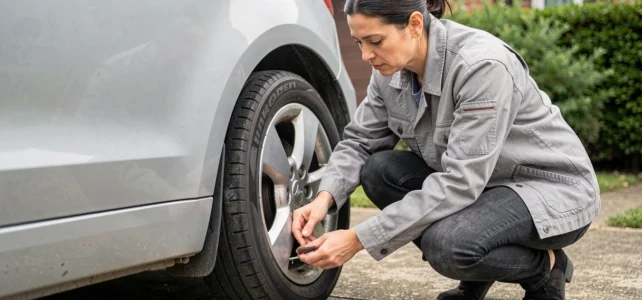
Maintenance guides list all the same actions: check the levels, monitor the tires, respect the oil change intervals. These reminders remain valid, but they mask a more determining point for the budget.
The most costly item is rarely the breakdown itself, but the delay in diagnosis. A rolling noise ignored for a few months can damage the hub, then the driveshaft. An untreated coolant leak can cause engine overheating, the repair of which far exceeds the initial cost.
Three areas deserve particular vigilance because they can deteriorate quickly:
- The braking system: worn pads damage the discs, and replacing both costs significantly more than replacing the pads alone
- The timing belt: on belt engines, exceeding the recommended mileage exposes you to engine failure, the cost of which can exceed the value of the vehicle
- Tires: beyond the wear of the tread, a tire over five years old loses grip even if it looks visually correct, which has a direct impact on safety and coverage in case of a claim
Electric vehicle: a distinct maintenance profile
The maintenance of an electric car does not follow the same pattern as that of a thermal vehicle. No oil change, no timing belt, no exhaust system. Brake pads wear out more slowly thanks to regenerative braking.
However, the repair of an electric car costs on average more than a comparable thermal vehicle, with marked differences on certain types of claims such as glass breakage. The battery, the most expensive component, requires specific monitoring that not all independent networks have mastered yet.
Choosing a used car: checks that the technical inspection does not cover
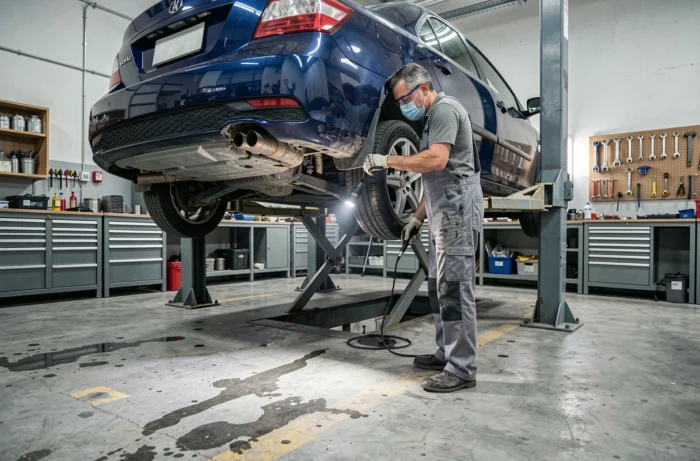
The technical inspection remains a mandatory step, but it does not guarantee the actual condition of the vehicle. It focuses on safety and pollution points, not on medium-term mechanical reliability.
When purchasing a used vehicle, several elements escape this regulatory visit:
- The condition of the clutch (progressive wear not detected during the technical inspection)
- The health of the gearbox, especially on automatic transmissions whose repairs are costly
- The actual maintenance history: a well-filled logbook is worth more than a low displayed mileage, as tampered odometers remain a documented problem in the used car market
- The condition of the air conditioning, whose recharge or compressor repair represents a significant cost
A used vehicle with a complete and transparent history better protects the buyer than a recent model without traceability. Asking for maintenance invoices, checking the consistency between mileage and visible wear (pedals, steering wheel, driver’s seat) remains the best sorting method before any test drive.
Auto insurance and contract choice: beyond the premium price
Comparing auto insurance solely on the basis of the monthly rate often leads to disappointments at the time of a claim. The deductible, the compensation cap, and the exclusions weigh more on the actual cost of an accident than the premium itself.
For an older vehicle with a low value, comprehensive insurance often no longer has economic justification. Conversely, a recent or electric vehicle, whose repair cost is high, deserves extensive coverage, including for the battery if the contract offers it.
Assistance coverage and replacement vehicle are two areas frequently underestimated. A driver who relies on their car for work should check the response time and the duration of the vehicle loan before signing.
The auto insurance market is evolving rapidly, with the gradual integration of connected data and price adjustments related to the inflation of spare parts. Reviewing one’s contract once a year, ensuring that the guarantees still correspond to the actual use of the vehicle, remains the most profitable reflex.