
What differentiates a menstrual swimsuit from a classic model in terms of manufacturing? The answer largely lies in a multi-layer technical insert, integrated into a textile production process that remains, moreover, very close to that of traditional swimwear. Understanding each step of this pipeline allows for a better assessment of the quality of a finished product, from the selection of raw materials to final tests in real conditions.
Technical materials of the menstrual swimsuit: nylon, polyester or PBT
The choice of base fabric determines water retention, UV resistance, and comfort once the swimsuit is wet. Swimwear manufacturers do not limit themselves to the often-mentioned cotton-membrane duo found in consumer guides.
| Base Material | Chlorine Resistance | Drying | Wet Opacity |
|---|---|---|---|
| Nylon (polyamide) | Medium (gradual degradation) | Fast | Good if weight is sufficient |
| Polyester | High | Very fast | Very good |
| PBT (polybutylene terephthalate) | High | Fast | Excellent |
Nylon offers a soft touch and good elasticity, but it does not withstand repeated baths in chlorinated pools as well. In contrast, polyester and PBT maintain their mechanical properties better over time.
For the menstrual part, manufacturers add functional layers: a draining layer in contact with the skin, an absorbent textile, and a waterproof membrane. These elements are validated through samples, lab dips (color tests on fabric), and tests in chlorinated and salt water before mass production.
A guide on creating menstrual swimsuits details the logic of layering these materials and the selection criteria for textiles suitable for swimming.
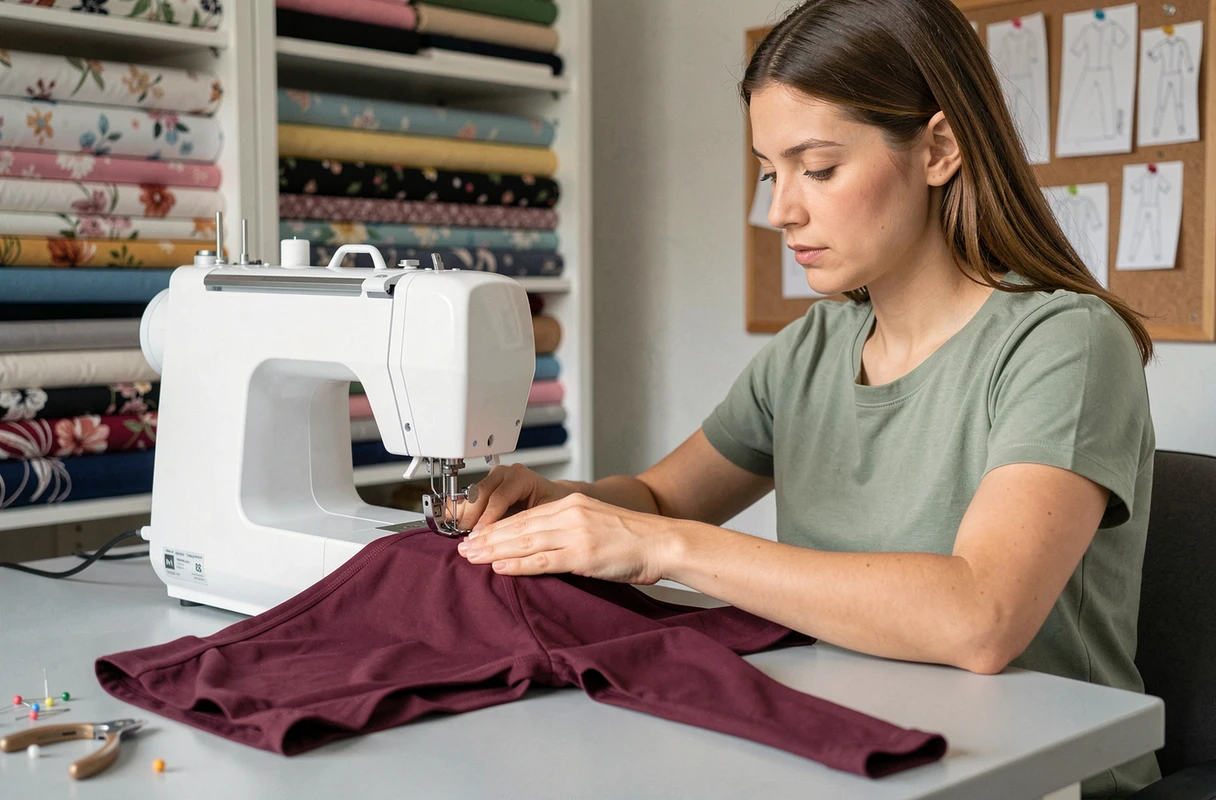
Textile manufacturing pipeline: from brief to menstrual prototype
The manufacturing of a menstrual swimsuit follows a classic swimwear pipeline, with an additional step specific to the absorbent insert. Here is the typical sequence:
- Brief and specifications: defining the model (one-piece, bikini, shorty), the targeted flow level, and the materials chosen for each area of the swimsuit
- Pattern making and grading: creating flat patterns, then scaling them to all sizes, incorporating the insert area into the bottom of the panty
- Prototyping and assembly of the insert: sewing the draining, absorbent, and waterproof layers, then attaching it to the body of the swimsuit through thermobonding or flat stitching to avoid visible bulk
- Fit and wear tests: dry fitting with a series of movements (walking, sitting, standing up, leg raises, bending) to check for any ride-up or gaping at the thighs
- Quality control and real conditions testing: immersion in chlorinated and salt water, checking wet opacity, pilling test, and UV resistance
This sequence shows that the menstrual insert is not added at the end of the chain, but integrated from the pattern making phase. The absorbent area influences the cut, thickness, and even the choice of elastane in the main fabric.
Validation points often overlooked
The wet opacity test is rarely mentioned, yet it determines the viability of the product. A fabric that becomes transparent when saturated with water renders the swimsuit unusable. Serious manufacturers test this parameter on each color, as a dark fabric and a light fabric do not react the same way to immersion.
The pilling test (resistance to pilling) is another indicator of durability. A swimsuit worn in a pool undergoes repeated friction against the edge of the pool, tiles, or lane lines. Without validation, the fabric can degrade within a few weeks of regular use.
Fitting and adjustment: the criterion that size alone does not cover
Choosing your usual size is not enough for a menstrual swimsuit. The fit must be checked dry with movement tests before any swimming. The reason is simple: the absorbent area must remain snug against the skin to function properly.
The movements to be performed during fitting are concrete: walking, sitting and standing up, raising legs, and bending the torso. If the swimsuit rides up, gapes at the thighs, or creates a gap between the insert and the skin, the leak-proof protection loses effectiveness.
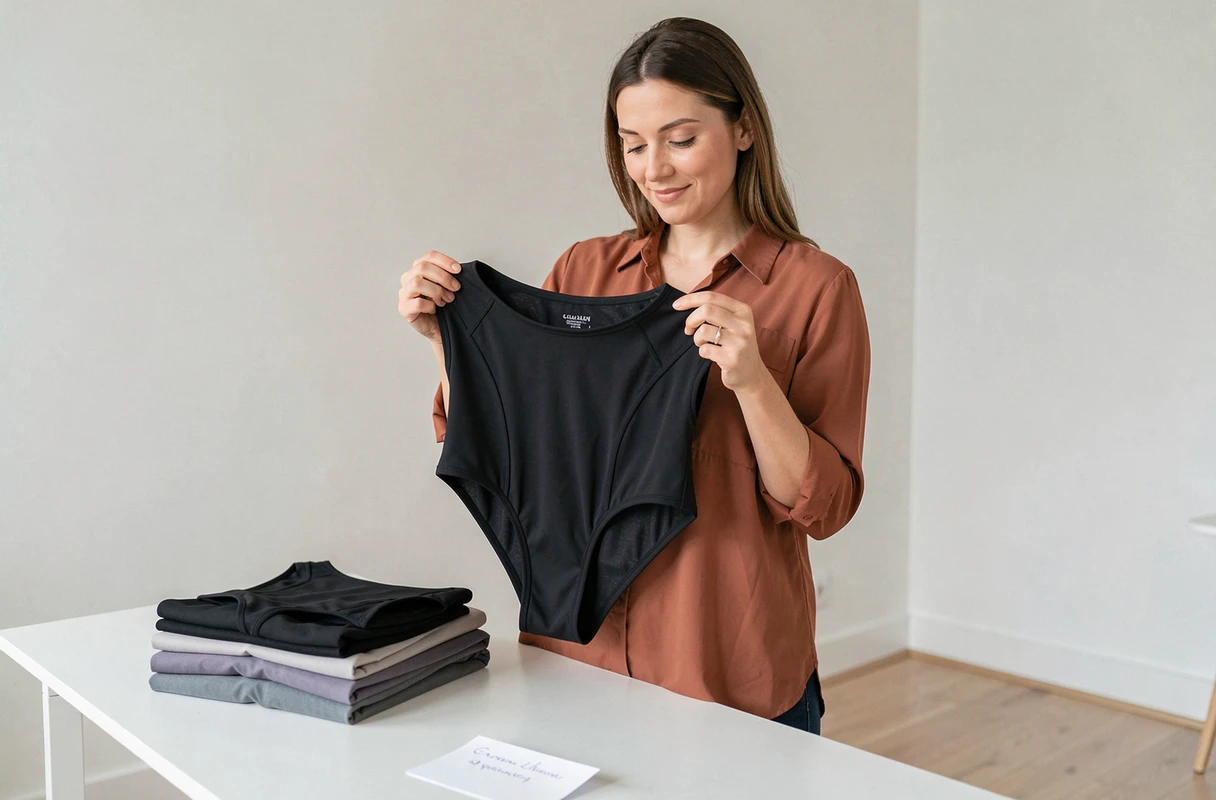
This fitting protocol explains why some brands offer specific cuts by morphology (high waist, adjustable cut) rather than a single cut available in multiple sizes. The shape of the swimsuit bottom directly influences the hold of the insert, more than the size itself.
Assembly of the absorbent insert: three layers with distinct functions
The protective area integrated into the swimsuit is based on a three-level textile sandwich principle:
- Draining layer (skin contact): it quickly captures the flow and transfers it to the absorbent, so that the surface remains dry to the touch
- Absorbent layer (middle): it retains the flow. Its weight and composition determine the capacity of the swimsuit, from light to medium depending on the models
- Waterproof membrane (outer): it prevents any leakage to the visible fabric of the swimsuit while remaining thin enough not to create a “layer” effect
The total thickness of the insert remains less than a few millimeters on finished models. This thinness results from a compromise between absorption capacity and visual discretion, negotiated during the prototyping phase.
Attachment of the insert to the body of the swimsuit
Two main techniques coexist. Thermobonding welds the layers with heat, producing a flat and almost invisible junction. Flat stitching, on the other hand, uses fine topstitching that holds the insert without creating a bulge. The choice depends on the materials used and the production budget.
The quality of this attachment determines the longevity of the swimsuit. A poorly attached insert can come loose after several washes or create pockets where the flow accumulates without being properly absorbed.
The manufacturing process of a menstrual swimsuit thus mobilizes classic textile skills and specific insert engineering. The difference between a reliable product and a gadget lies in the validation steps: movement tests, immersion in chlorinated water, opacity checks, and pilling verification. It is these controls, more than the number of layers stated on a product sheet, that guarantee that a menstrual swimsuit truly fulfills its function.