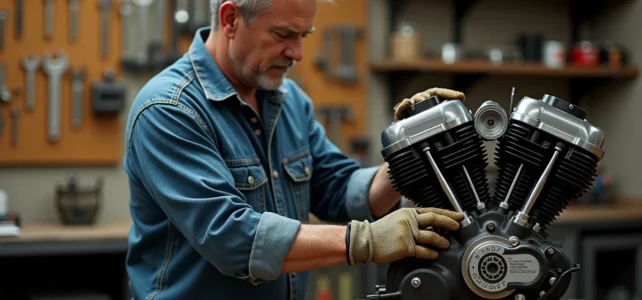
The Milwaukee-Eight 107 and 114 have dominated the Harley-Davidson catalog since 2017, but the reliability of these engines is not just about their displacement. Between massive recalls on the 2024 Touring models, feedback on aging Twin Cam engines, and the arrival of the Revolution Max on the Sportster S and Pan America, we now have enough perspective to make a judgment.
NHTSA Recall on the Milwaukee-Eight Touring 2024: A Signal Not to Be Ignored
A recent fact puts the glowing reviews of the 2024 Street Glide and Road Glide into perspective. The NHTSA has recorded a massive recall on several tens of thousands of Touring models equipped with the Milwaukee-Eight, across all displacements. The identified defect concerns the routing of the output wire from the voltage regulator, which rubs against the engine case.
This contact ultimately causes a short circuit that can lead to a total loss of electrical power, and thus propulsion, while riding. On a machine weighing over 350 kg on the highway, the severity of this scenario speaks for itself.
This recall does not call into question the architecture of the M8, but it highlights a recurring problem at Harley-Davidson: the quality of assembly and routing of electrical harnesses. We observe that this type of defect regularly appears in the early production series, regardless of the engine block. Those interested in the reliability of Harley Davidson engines will find a comprehensive overview of the points of vigilance by generation.
Milwaukee-Eight 107 vs 114 vs 117: Comparative Reliability of the Three Displacements
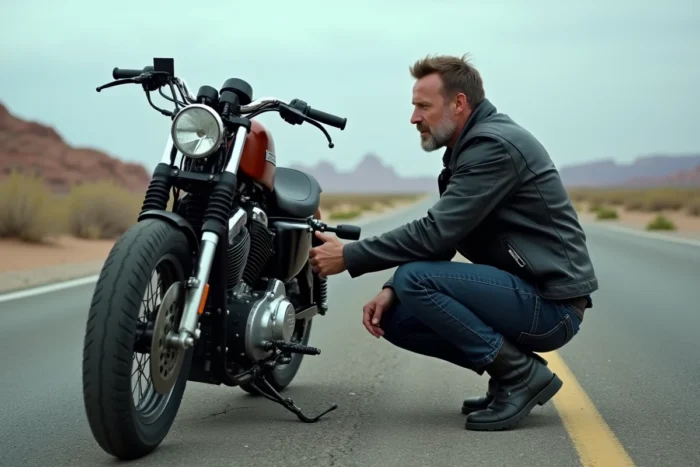
The M8 107 remains the most proven engine in the current range. Present since 2017 on entry-level Touring models, it has accumulated enough miles in the field for structural weaknesses to be identified. Field reports converge: the 107 performs remarkably well in regular touring use, provided that oil change intervals are respected and the hydraulic timing chain tensioner is monitored.
The 114, offered on the higher versions (Street Glide Special, Road King Special), shares the same architecture but with larger diameter pistons. The thermal stress increases, and the exhaust valves work harder. In practice, the difference in longevity between the 107 and 114 remains marginal under normal road use.
The 117, reserved for CVO and now for the 2024 Street Glide, pushes the envelope further. The additional torque is appreciated, but we recommend increased attention to thermal management, especially in urban riding in hot weather. Stage kits only amplify this requirement.
Common Monitoring Points for All Three M8s
- The hydraulic timing chain tensioner may generate a knocking sound when cold on high-mileage units, indicating wear that should be monitored before it becomes critical.
- The voltage regulator and routing of electrical harnesses, as shown by the NHTSA recall, deserve a visual inspection at every service.
- The automatic valve clearance compensation works well on the 107, but the 114 and 117 benefit from periodic manual checks for those exceeding current mileage thresholds.
Evolution and Twin Cam: Long-Term Reliability as a Benchmark
The Evolution engines (1984-1999) remain the absolute benchmark in longevity at Harley-Davidson. Their simpler design, without balancing by a counter-rotating shaft, limits wear parts. Some units exceed 150,000 km without major lower engine revisions, provided they are well maintained.
The Twin Cam (1999-2017) went through two distinct phases. The early Twin Cam 88 suffered from a known issue with internal cam bearings, which was corrected on the Twin Cam 96 and 103. The Twin Cam 103 represents the best reliability/performance compromise of this generation, with a reduced history of failures compared to the 88 and 110.
However, the Twin Cam 110 from CVO shares the same logic as the M8 117: more power implies more thermal stress. In the used market, a well-maintained Twin Cam 103 is a rational choice for those seeking mechanical peace of mind without sacrificing character.
Revolution Max on Sportster S and Pan America: A Reliable but Young Engine
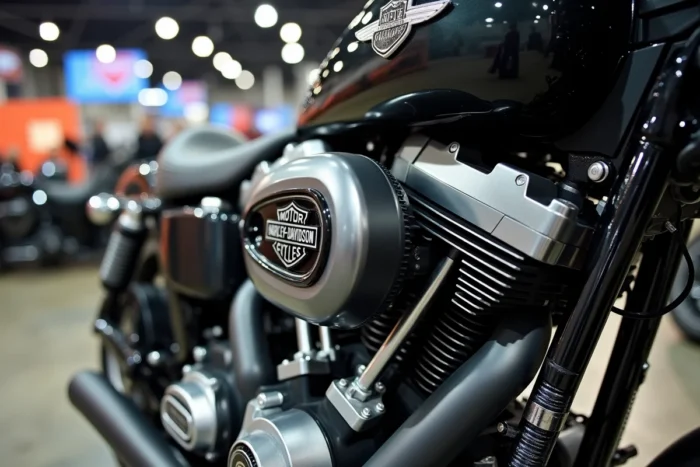
The Revolution Max 1250 marks a technological break for Harley-Davidson: liquid cooling, double overhead camshafts, chain-driven distribution. This engine, shared between the Sportster S and the Pan America, does not yet have the mileage history of the M8 or Twin Cam.
Initial feedback after a few years on the market is generally positive. Liquid cooling effectively eliminates the overheating problem that affects air-cooled V-Twins. Chain-driven distribution also removes the issue of hydraulic tensioners.
However, we observe that the Revolution Max requires more rigorous maintenance than traditional engines. The cooling system, thermostat, and water pump add potential failure points absent in air-cooled engines. For a rider accustomed to the simplicity of an Evo or Twin Cam, the transition requires adaptation in maintenance follow-up.
Comparison with Honda and BMW in the Adventure Segment
Against Honda’s CRF1100L Africa Twin or BMW’s R 1250 GS, the Pan America has a reliability record that is still too recent to compete in terms of statistical confidence. Honda and BMW have several decades of feedback on their twin-cylinder architectures. The Revolution Max will need to prove its durability over time.
The choice of the most reliable Harley-Davidson engine in 2024 directly depends on usage and risk tolerance. A used Twin Cam 103 remains the safest bet for those prioritizing raw longevity. The Milwaukee-Eight 107 offers the best balance in the current range, provided that the points related to the NHTSA recall are checked. The Revolution Max appeals with its modernity, but its history is yet to be built.