
Saint-Malo is a city whose visit changes radically depending on the time of the tide, the season, and the current access conditions. Before listing monuments, understanding these parameters allows for enjoying sites that, at high tide or during restriction periods, remain simply inaccessible.
Tides and pedestrian access: the factor that conditions any visit to Saint-Malo
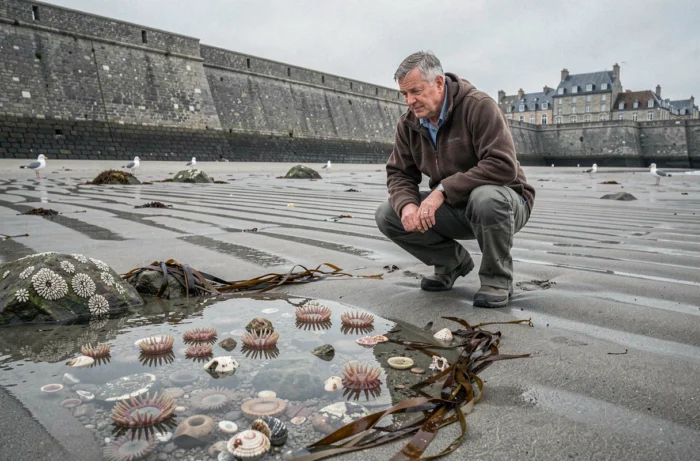
The Malouin coast experiences some of the largest tidal ranges in Europe. This shift between high and low tide transforms the landscape several times a day. The Fort National, the islands of Grand Bé and Petit Bé are only accessible on foot at low tide, during a few-hour window. Missing the window means postponing the visit to the next day.
Checking the tide schedules before each day is not an optional piece of advice. It is the logistical basis of any stay. The highest tide coefficients (particularly during the equinox spring tides) provide a spectacular wave display on the Sillon seawall that attracts thousands of visitors, but they also reduce the duration of access to sites revealed at low tide.
Specifically, Saint-Malo is visited by aligning your schedule with two rhythms: that of the rising tide (ramparts, intra-muros, museums) and that of the falling tide (forts, islands, sculpted rocks of Rothéneuf, widened beaches).
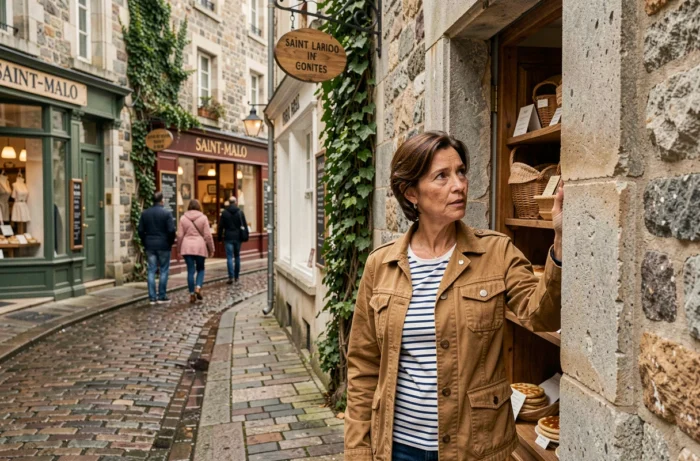
Access restrictions in summer: traffic, parking, and regulated natural spaces
For several summers, the city has strengthened the rules governing attendance. In August 2026, the Briantais park was subject to public access regulations related to fire risk and drought, with nighttime traffic bans and limitations on gatherings. This type of measure, reported by Actu.fr on August 21, 2026, may be repeated from year to year depending on weather conditions.
For motorized visitors, intra-muros parking is extremely limited during high season. The peripheral park-and-ride lots and the maritime shuttle between Saint-Malo and Dinard then become concrete solutions, not just simple alternatives. Arriving early in the morning or favoring the months of May, June, and September changes the game.
On the pleasure boating side, marina entry rules evolved in spring-summer 2026, with checks related to the EES system and a specific protocol for certain arrivals and departures. This port-city aspect is absent from most tourist guides, even though it directly concerns visitors arriving by sea.
Visiting Saint-Malo intra-muros by season: what really changes
The intra-muros of Saint-Malo, the fortified corsair city, can be explored year-round. The ramparts offer views of the Emerald Coast, the port, and the forts regardless of the time of year. However, the experience differs significantly between July and November.
In high season, the density of visitors in the streets makes strolling less enjoyable. The terraces of Place Chateaubriand are fully booked, and the queues at the aquarium grow longer. The summer report for 2026 from Ouest-France on August 10 indicates stable attendance but decreased spending, a sign that visitors come but spend less.
In the off-season (September-October), the Heritage Days open sites that are usually closed. In August 2026, the Fort de la Conchée opened its doors for this event, a maritime structure rarely accessible located off the coast of Saint-Malo. Such opportunities exist only during specific time slots.
- May-June: favorable weather, moderate crowds, smooth access to parking and the beaches of Sillon and Bon-Secours
- July-August: events and festivals (the Route du Rock 2026 recorded its highest attendance in twelve years), but increased traffic and access constraints
- September-October: lower accommodation rates, exceptional heritage openings, spectacular equinox spring tides
- November-March: quiet city, some museums with reduced hours, but winter lights on the ramparts and authentic Breton port atmosphere
Beyond intra-muros: Cancale, Dinard, and the Emerald Coast from Saint-Malo
Saint-Malo serves as a base to explore the northern coast of Brittany. Two excursions deserve careful planning rather than improvisation.
Cancale and its oyster parks are about twenty minutes by car. The oyster market at the port of La Houle allows for tasting on-site, facing the bay of Mont-Saint-Michel. Here again, the tide matters: at low tide, the oyster parks reveal themselves and the view extends far.
Dinard, accessible by the maritime shuttle from Saint-Malo, presents a very different face: Belle Époque villas along the Promenade du Clair de Lune, sheltered beaches, a more residential atmosphere. The boat crossing takes about ten minutes and avoids summer traffic jams on the road.
The GR34: hiking on the customs officers’ path
The coastal path GR34 runs along the entire Breton coast and passes through Saint-Malo. Some sections accessible for a day offer panoramas of the forts and the Emerald Coast that the road does not allow you to see. The section between Pointe de la Varde and Rothéneuf combines cliffs, coves, and the famous sculpted rocks, over a distance that can be covered in a few hours.
The Fort du Guesclin, visible from the path, is only accessible at low tide, a further reminder that the rhythm of the tides conditions every step of a stay in Saint-Malo.
Preparing a visit to Saint-Malo without checking the tide schedules and any seasonal access restrictions amounts to planning a stay halfway. The most remarkable sites of the corsair city, from the Fort National to the Fort de la Conchée, require a minimum of anticipation, making their discovery all the more satisfying.