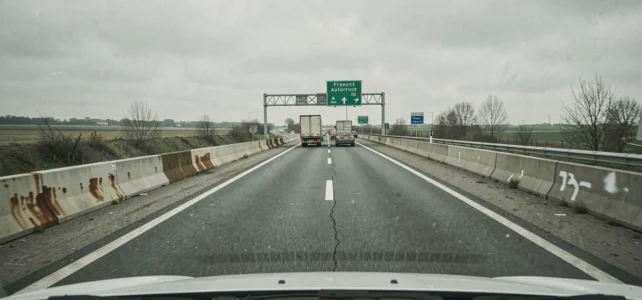
French highways have the lowest fatality rate per kilometer traveled of any road network. Ranking these routes from “most dangerous” to “least dangerous” gives a misleading picture.
Highway fatalities are on the rise again in 2025. This rebound raises questions less about the layout of the roads than about what happens on them: driver behavior, exposure of workers, and deteriorating traffic conditions.
Highway Fatalities in 2025: The Data That Matters
The 2025 trend places highways far behind departmental and national roads in absolute numbers of fatalities, but the trend is clearly unfavorable.
| Indicator | Highways | Secondary Network (roads, national) |
|---|---|---|
| Fatality Trend 2025 | Increasing | Stable or slightly decreasing depending on the route |
| Primary Cause of Fatal Accidents | Alcohol, drugs, medications | Alcohol, speed |
| Increasing Factor | Inattention (screens, phone, GPS) | Inattention |
| Specific Risk | Accidents involving personnel on duty | Head-on collisions on single carriageway |
This table highlights a point often overlooked in rankings: the type of network changes the nature of the danger, not just its intensity. On highways, the risk focuses on identifiable behaviors and the exposure of people working at the roadside.
You can learn more on Paris Astuce about the most accident-prone routes in the French highway network.
Alcohol, Drugs, and Medications Behind the Wheel on Highways
For the fifth consecutive year, alcohol, drugs, and medications are the leading cause of fatal accidents on the highway network. This persistence shows that it is not a temporary spike but a structural problem.
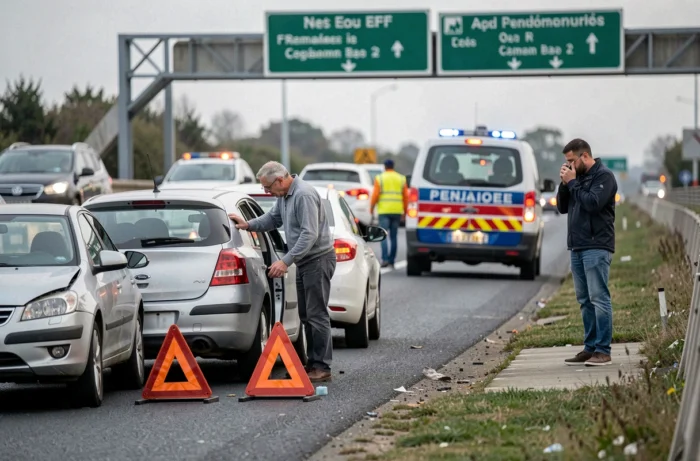
The particularity of the highway lies in the speeds involved. A driver under the influence of substances travels on average much further before reacting than in urban areas. The extended reaction time, combined with high speed, eliminates any margin for correction.
Prevention campaigns regularly target speed or seatbelt use. The consumption of psychoactive substances while driving remains more difficult to detect in advance, which partly explains its constant position at the top of the reports.
Inattention While Driving: The Fastest Growing Factor
Inattention related to screens, phones, and GPS shows a marked increase in fatal accidents on highways in 2025. This factor is taking up an increasing share of the reports, while highway infrastructures have not fundamentally changed.
A few seconds of inattention at 130 km/h represents several hundred meters traveled blindly. The monotony of certain straight sections amplifies the phenomenon: the driver, less visually engaged, compensates by using a screen.
Driver assistance systems (adaptive cruise control, lane departure warning) can create a false sense of security. The driver mentally delegates the monitoring of the road, which increases the risk during an unexpected event such as a sudden slowdown or an obstacle on the roadway.
Three Behaviors That Turn Highways into Risk Zones
- Checking a text message or GPS route without stopping at a rest area, which occupies the gaze for several consecutive seconds
- Driving under the influence of sedative medications (level 2 or 3 pictogram on the box) without assessing their impact on reflexes at high speed
- Failing to adjust speed or positioning when approaching a work or intervention zone, endangering personnel present on the emergency stopping lane
Personnel on Duty on Highways: An Underreported Risk
Highway agents, tow truck drivers, and law enforcement who intervene on the roads are exposed to a direct and recurring danger. Many accidents each year involve personnel on duty, struck by vehicles whose drivers have not slowed down or altered their trajectory.
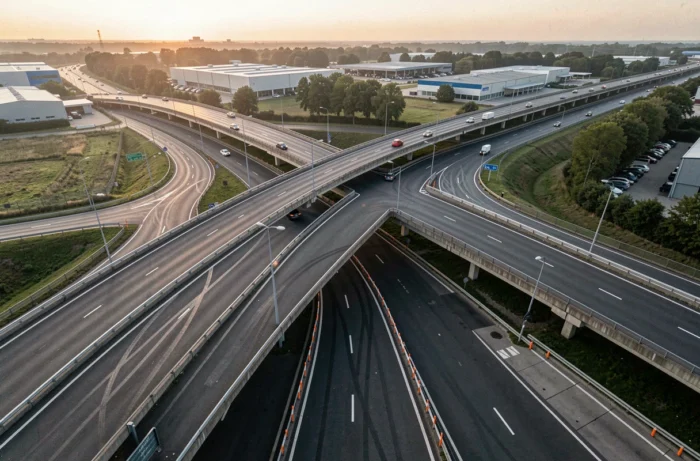
This risk does not appear in any “ranking of dangerous highways” because it does not depend on the layout. It depends on user behavior in response to an unusual situation: a vehicle stopped on the emergency lane, construction signage, light signals.
However, certain sections concentrate more interventions (high traffic zones, recurrent accident-prone sections), which mechanically increases the exposure of the responders. The increased risk does not come from the road itself but from the density of events that require human presence at the roadside.
Aggravating Factors for Responders
- Heavy traffic with inattentive drivers who do not respect the safety corridor around intervention vehicles
- Nighttime interventions or poor visibility, where signaling devices are less perceived despite their regulatory compliance
- High speeds maintained by some users despite reduction signage, creating a critical speed differential with the intervention zone
The rise in highway fatalities in 2025 does not indicate that one highway is more dangerous than another. It highlights recurring behaviors (psychoactive substances, inattention) and exposed populations (responders) that rankings by route do not capture. The danger of a highway is measured less by its layout than by what its users do on it.